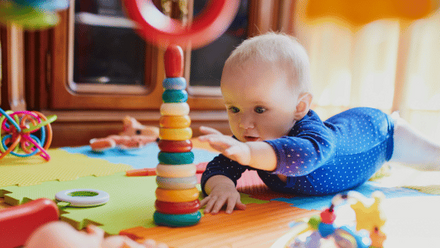
Believe it or not, you can get involved in maths with children from a much younger age! Babies as young as six months can recognise the difference in amounts between small sets.
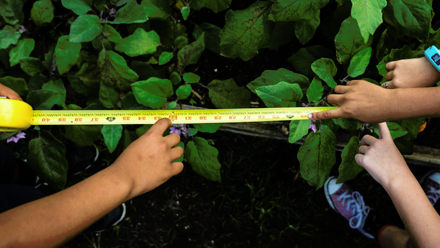
Children need opportunities to physically experience and compare different types of measures such as length, size and height, so provide lots of opportunity for young children to explore contrasting items to compare their features in terms of measures.
Developing confident mathematicians with a positive attitude and interest in maths starts in a child’s earliest years.
Before children can understand and count purposefully, they need to develop a sense of number (what numbers are, what they mean, what different numbers look like as a physical concept and what they can do with them) and singing number rhymes will support children to do this. Check out our number rhyme time learning activity.
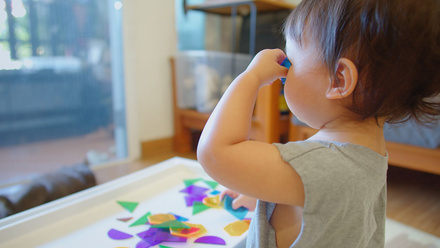
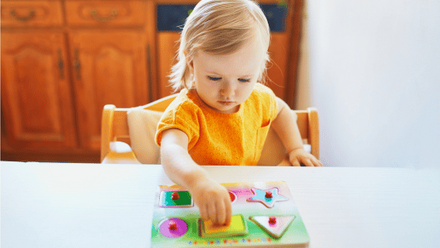
A shape hunt helps children develop mathematical concepts, language and motor skills through playful exploration. As they find and name shapes, they build confidence, problem-solving abilities and curiosity in a fun, hands-on way.
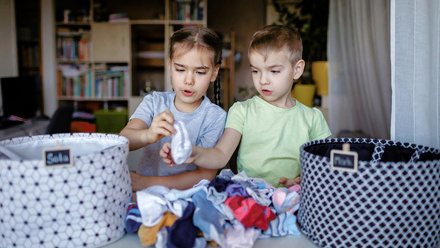
Develop children’s mathematical understanding by using everyday items to sort into matching pairs. Socks are a great way to look at patterns, similarities and differences, and provide problem solving opportunities for children.
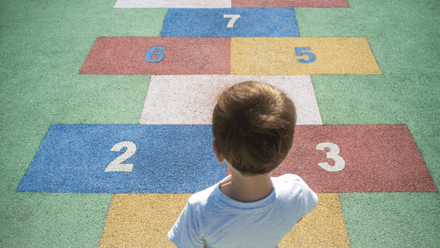
There are many benefits to physical activity and studies show that being active in body can enable us to concentrate more and problem-solve rationally by developing our executive function skills.
In this learning workout, we are going to explore ways in which we can use early maths outside of structured plans and implement this kind of learning in everyday activity.
Early maths experiences set the foundations for children’s future success. Offering a wide range of maths experiences, across all age groups, will provide opportunities for curiosity, fun and engaging activities and foster a love of maths.
The new Statutory Framework for the EYFS places an emphasis on children developing a love of maths. If maths language can be woven into their children’s everyday experiences, they will develop a secure foundation as they make progress in this area.