Early years activity: Friendship circle
Practitioners play an important role in supporting children’s friendships, through creating inclusive environments, role modelling positive interactions and providing opportunities for children to socialise in varied peer groups. Learning how to be a good friend builds the foundations for future healthy relationships and confident socialisation, which supports positive mental well-being.
Friendship circle learning aims
- Personal, social and emotional development
- Communication and language
- Confidence and self-esteem
- Sense of belonging.
Resources you will need for this activity
- A book about friends to introduce the activity, e.g. The Squirrels Who Squabbled by Rachel Bright
- A soft toy
- Quiet space.
Friendship circle activity outline
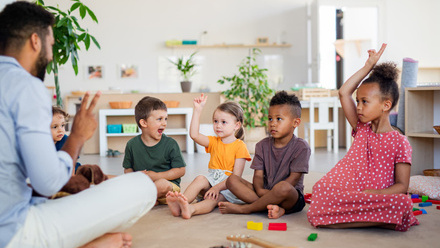
- Sit in a circle and read your chosen story to the children
- Talk about ‘friends’ and the importance of having a friend (what they do, how they help us etc.). Share examples of your own friends and the things you do for each other
- Introduce the activity explain to the children: Your chosen soft toy wants to learn how to be a good friend and would love to know what the children get up to with their own friends. Pass the soft toy to the first child. Ask them to share something that makes someone a good friend and something they enjoy doing together with their friends
- Continue passing the toy around the circle until everyone has had a go at sharing
- Summarise their key points and what being a good friend means to them and the activities they like to get up to
- Encourage the children to try to be a good friend by doing some of the things they have identified during their sharing of ideas.
Ideas to extend this activity
- Create a display, showing how to be a good friend.
NDNA products to help you with this activity
Developing Self-Regulation, Supporting Well-Being - Face to face training
Disclaimer: Activities with children must always be risk assessed, including for allergies or choking. Children must always have adequate supervision. Resources and materials must always be appropriate for children’s age and stage of development.