Early years activity: Mirror Faces
This simple activity which encourages children to explore their emotions and expressions through play. Using mirrors, children can observe their own faces, copy different expressions and begin to recognise how our faces can show how we are feeling. The activity also supports children's confidence, communication and self-awareness in a playful and engaging way.
Mirror faces learning aims
- Recognise and express different emotions
- Develop children's understanding of facial expressions and body language
- Build confidence in expressing themselves
- Develop vocabulary such as happy, sad, surprised, smile, frown, eyes, mouth
- Encourage children to notice similarities and differences between themselves and others
- Develop turn-taking, attention and imitation skills.
Resources you will need for this activity
- Child-safe mirrors
- Emotion picture cards (optional)
- A selection of familiar songs about emotions or faces (optional).
Mirror faces activity outline
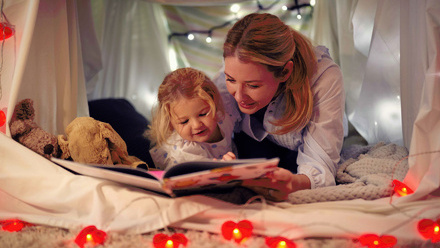
- Introduce talking about feelings with some music or a story book
- Provide each child with a child-safe mirror and give them time to explore their reflection. Encourage them to notice their eyes, mouth and eyebrows and experiment with different expressions, such as happy, sad, surprised, excited, sleepy or cross
- Talk about what happens to their face when they make each expression. Encourage children to copy your expressions and then give them opportunities to create their own. You could say: "Can you make a really surprised face? What happens to your eyes? Can you make a tiny smile? What about a huge smile?"
- Invite children to look at each other and copy one another's expressions, developing this into a simple 'mirror game' where one child makes a face or movement and their partner copies them
- For older children, extend the conversation by connecting emotions with familiar experiences: “What makes you feel excited?”, “How might you feel when someone you love comes to collect you?”, “What helps you when you feel sad or worried?”
- Keep the mirrors accessible so children can return to them independently. Practitioners can build children’s emotional vocabulary by noticing, naming and acknowledging feelings as they naturally occur. For example, when a child smiles proudly after achieving something, or becomes frustrated when something feels difficult, acknowledge the emotion and help them connect how they are feeling with the experience.
Ideas to extend this activity
- You could take photographs of children's different expressions (with appropriate permissions) and create a display of ‘Our Feelings Faces’ for children to revisit and talk about.
NDNA products to support you with this activity
Disclaimer: Activities with children must always be risk assessed, including for allergies or choking. Children must always have adequate supervision. Resources and materials must always be appropriate for children’s age and stage of development.